Finding Faith to Face Fear: A Place Where Terror Has No Dominion

(The following piece was published on Monday, November 16th, 2015 by Patheos:  http://www.patheos.com/blogs/faithforward/2015/11/finding-faith-to-face-fear-a-place-where-terror-has-no-dominion/)

**

This is what war looks like in the 21st century: The enemy is not confined to some particular country that we can attack. The enemy does not necessarily form an army that we can engage at a border. We cannot round them up. We cannot sever their lines of communication. They seem to be able to strike at will, wherever and whenever they choose. If we were to lose this war, it will not be because they have invaded and occupied our country; but because they have invaded and occupied our minds.

I have a very dear friend who was born in an occupied territory in the Middle East where he and his fellow country men and women lived as virtual slaves. The rumor reached the authorities ~ and it was not true ~ that he was participating in an attempt to overthrow the government. To escape further persecution and possibly even death ~ he and his family became refugees and fled across the border of a neighboring country where they hid-out until it was safe to slip back into their homeland. Eventually, my friend was caught and murdered by the government for being a revolutionary and an insurgent. My friend’s name is Jesus.

Many people, including some of his own disciples and followers, wanted Jesus to lead them in armed rebellion against their oppressors. They wanted Jesus to kick butt and take no hostages! But Jesus did have a plan to overthrow the yoke of oppression and evil. And Jesus did stuik to his message, even though he was eventually executed by the occupying, military government. And so what was his strategy, his mission, his plan, his “secret weapon”? His law was love; and his gospel was peace. I have another friend. Have you heard these words before?

“The ultimate weakness of violence

is that it is a descending spiral,
begetting the very thing it seeks to destroy.
Instead of diminishing evil, it multiplies it.
Through violence you may murder the liar,
but you cannot murder the lie, nor establish the truth.
Through violence you may murder the hater,
but you do not murder hate.
In fact, violence merely increases hate. So it goes.
Returning violence for violence multiplies violence ~
adding deeper darkness to a night already devoid of stars.
Darkness cannot drive out darkness: only light can do that.
Hate cannot drive out hate: only love can do that.

~ Dr. Martin Luther King, Jr.

*

Many people come to church in times of trouble because they hope and pray that there is at least one place where they can be welcomed with open arms; accepted for who they are and not for who they appear to be; a place where they are not judged or condemned for being different. They come hoping to find people and holy books and healing rituals that will help them to make sense of the madness that surrounds us.  They come to befriend the Prince of Peace.

May we keep a faith, a hope, a and vision that cannot be held hostage. And may we be such a people that, in our healing, we go where words and thoughts are not always effective, and where fear and hate have no dominion over love and peace. Yes, perhaps the worst level of terror is when you allow it to infiltrate your mind and soul. May we all experience and emanate a peace that surpasses all human understanding.

The Journey from Terror to Peace

THE MORE THEY INFLICT TERROR ~ THE MORE WE INVOKE PEACE.

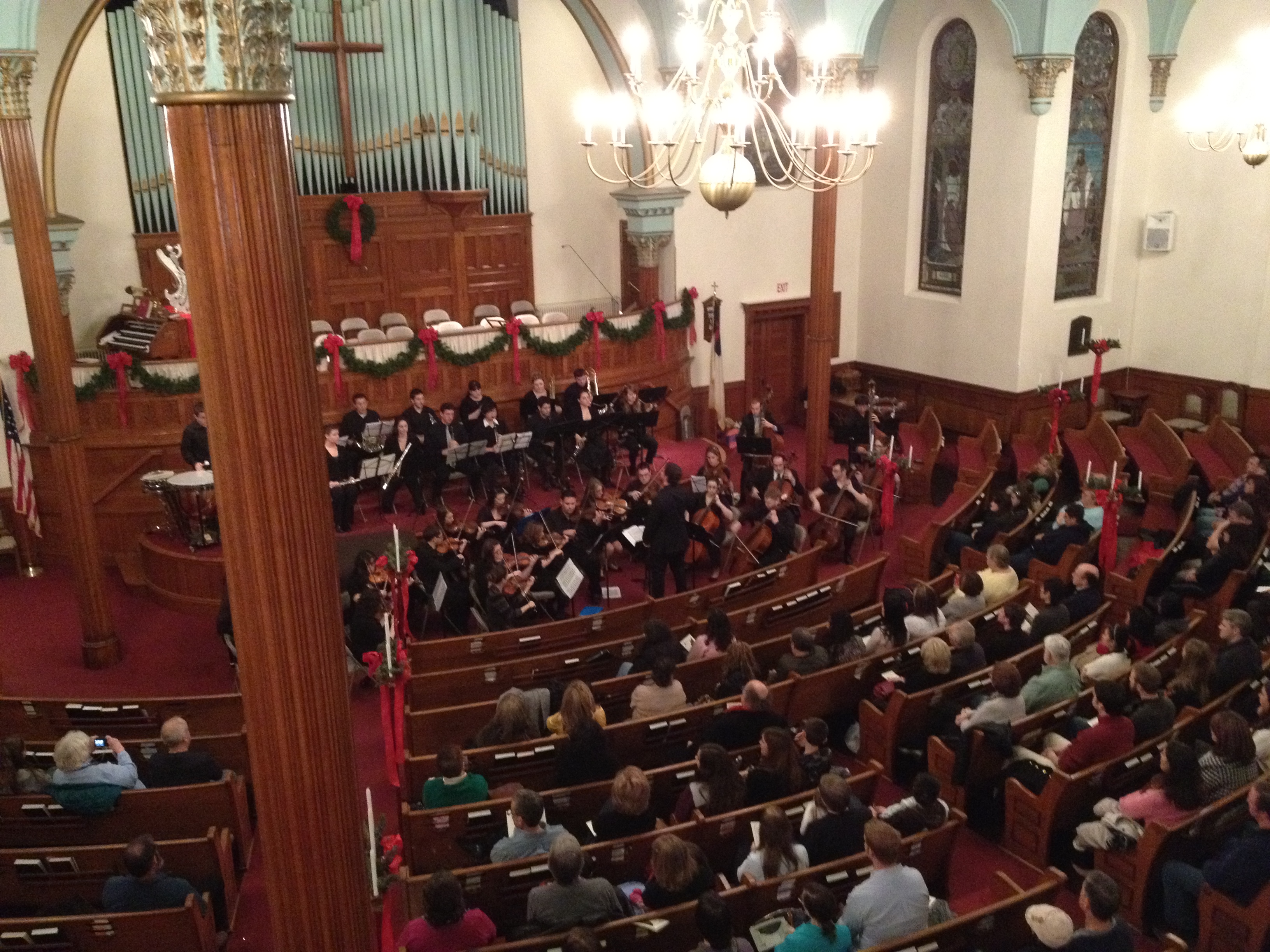
This is NOT a religious event that is about to be held at our church tomorrowcoexist. Join us as we sing, play music, evoke silent prayer and contemplation, drum, chant, light candles and celebrate peace & goodness this Sunday, November 15th at 7pm at the Congregational Church of Patchogue, 95 East Main St. \And yes, cynics are welcome too. So too (especially) are younger persons who are inheritors of an often frightening world. This stuff works. We have done it before and we will do it again. We created peace in the aftermath of the hate crime killing of Marcelo Lucero (the funeral was here). We created peace in the after math of Newtown. We created peace in the aftermath of the mass murder of Coptic Christians on a pristine beach in Libya. And we will create peace on Long Island. Be peace…

THEY INFLICT TERROR, WE INVOKE PEACE

THE MORE THEY INFLIICT TERROR ~ THE MORE WE INVOKE PEACE. Join Jack WaterfallJack Licitra, me and many others as we sing, play music, evoke silent prayer and contemplation, drum, chant and celebrate peace & goodness on this Sunday, November 15th at 7pm at the Congregational Church of Patchogue, 95 East Main St. Cynics are welcome too. This stuff works. We have done it before and we will do it again. Be peace…

Dwight Lee Wolter
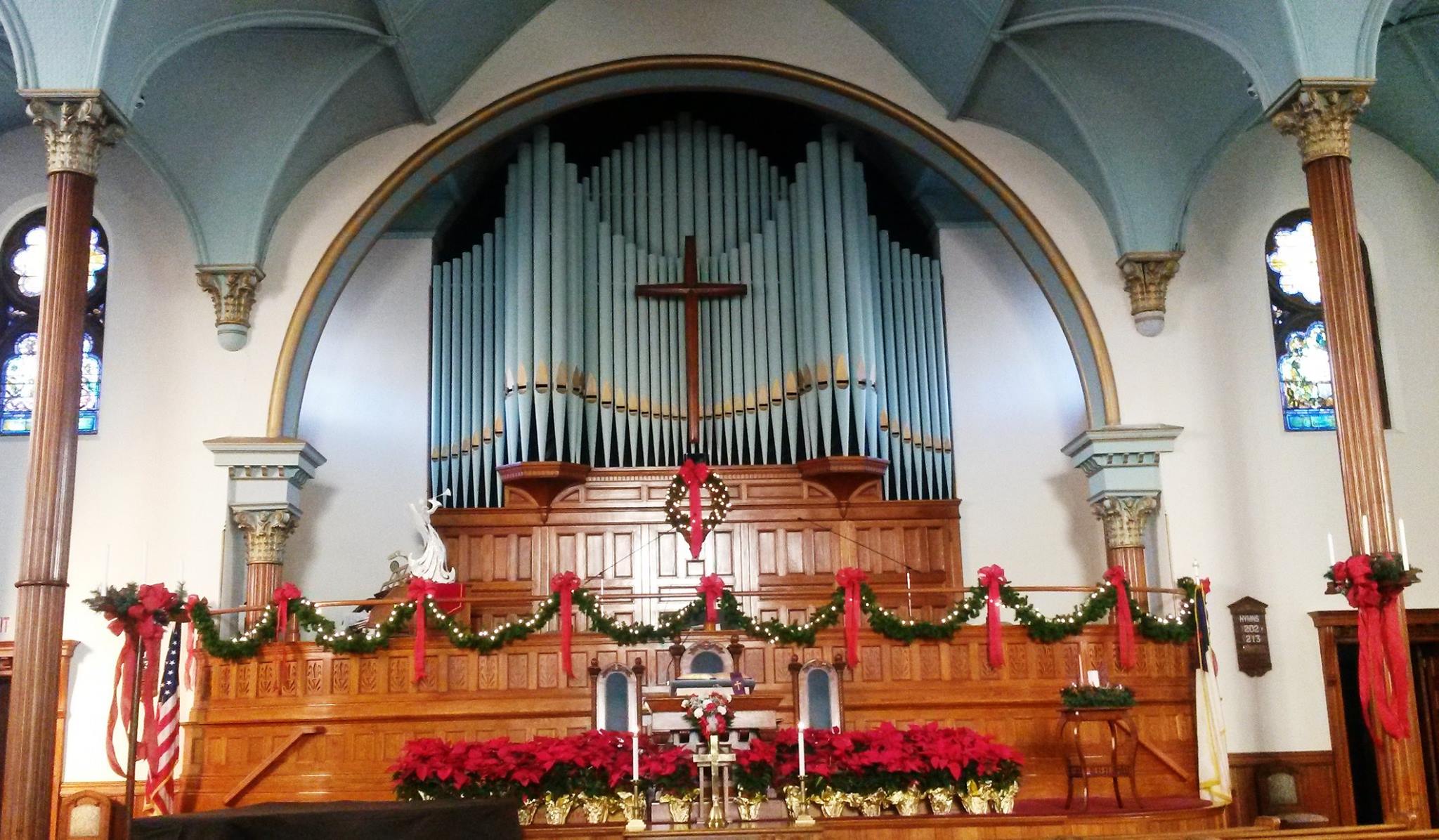
Facebook: Dwight Wolteradvent sanctuary photo

ENOUGH ALREADY ABOUT A COFFEE CUP

It never ceases too amaze me how people get upset about some stuff while ignoring others. For example: The thrill now is about a Starbuck’s coffee cup. The battle lines have been drawn between those who are upset about a coffee cup and those who are upset about those who are upset about a coffee cup. The discussion is waxing supremely theological, philosophical, and whatever, whatever. Enough already!

I wouldn’t mind, however, if the  conversation morphs into a discussion about FREE TRADE COFFEE. Countless thousands of people are trapped in virtual  slavery picking coffee beans so that we can get all-tanked-up with caffeine and rant about Jesus and Christmas.

Please purchase FREE TRADE COFFEE that offers a living wage to pickers, processors and others. And then let’s rant about what  is IN the cup, rather than what is ON it.strange angels

Keeping Faith Being Unable and/or Unwilling to See

When I bought eyeglasses for the first time, I suddenly and dramatically discovered the clarity I had been missing. But I also had to be careful walking down stairs as I had a hard time judging depth. I got headaches from the intensity of my newfound vision. I had to adjust to a new way of seeing.

Recently, I invited Albert Rizzi to co-present a shared sermon with me. He had unexpectedly lost his sight in 2006 at the age of 41. In 2009, he launched a non-profit company advocating that all blind persons are entitled to acceptance and freedom from discrimination. He works to develop accessible computer accounting software to help reduce the national 60% unemployment rate among the blind.

Rizzi’s blindness became a national news story in 2013 when he and his guide dog, Dox (short for doxology), were ejected from an airplane because he could not get Dox to crawl under the seat for takeoff. They had been on the tarmac for one hour and 45 minutes and the dog had become restless. In protest of Albert and Dox’s eviction, the 45 other passengers joined Rizzi and Dox in departing the plane and the flight was cancelled.

Rizzi claims his ability to see actually became more focused after blindness. During our shared sermon, I mentioned how Jesus encountered a blind man sitting by the roadside, begging and shouting, “Jesus, Son of David, have mercy on me!” The Bible says those around the man, “sternly ordered him to be quiet.” That means they told him to shut up! Rizzi stated, “I have often felt abandoned on the roadside just like the blind man. I felt unseen, untouchable and outcast. Since losing my eyesight I have been denied service; access to software programs and mobile apps; and was denied my job back as a principal and kindergarten teacher. I was unable to shop for food and, at times, even worship like everyone else.

“Many people,” Rizzi stated, “still turn an intentional ‘blind eye’ to the needs of blind persons along the side of the road. Are you more like the people shouting at the blind man to shut up? Are you more like Jesus, accepting and loving ~ or are you blind to his teachings of acceptance and inclusion?  If we truly see and believe in the vision that Christ has for all of us ~ then how can we allow people who see, walk, speak or live differently to be shut out, told to shut up, and not fully welcomed at His table?”

Rizzi has come to believe that his blindness was actually a gift from God, although a gift he had never wanted.  “The mysteries of faith” he said, “ are just that: mysteries. And they are not always so obvious that we can see them with our eyes open. Sometimes we need to close our eyes to see deeply and with intention.”

“It seems to me,” I replied to Rizzi, “that Jesus tried to show many things to people and they refused to see. We are just like them. Our vision, prejudices and ego can contort what we see into what we wish to see. We believe the mirage because it is more palatable. You could draw a straight line connecting intentional blindness in the Bible to intentional blindness of people who refuse to see such things as the symptoms of serious physical illness; a problem with gambling away the rent money; or the person who refuses to see that they are no longer able to take care of themselves. Some things are too painful to look at. What are some of the realities about blindness” I asked, “that we, the sighted, refuse to see and what have you learned from them?”

Rizzi quoted Helen Keller, “The only thing worse than being blind is having sight but no vision.” Rizzi continued, “There are several million severely visually impaired people living in the United States and those numbers will increase dramatically with aging baby boomers. We cannot be blind to the teachings of inclusion and acceptance. I choose to believe in hope. Thanks to my faith and the faith my parents had in me to rise above this supposed tragedy ~ I believe that through Christ all things are possible. My vision is of a world of endless possibilities. I have a blind faith that goodness, justice and mercy shall prevail. We all have crosses to bear, but what defines us is how we carry them and whether we embrace them as part of a larger plan that none of us can yet fully appreciate. Although I am not able to see in the traditional sense, my faith will not allow me to give up on my vision. I am an educator, and am now challenged to live by example, much as Jesus did. We are all meant for greater things, and I am not tempted by distractions that would change my focus on the journey that lies ahead, a journey I make under the guidance, not of my eyes, but of God.

“I launched my nonprofit to promote acceptance and respect for people who are blind and print disabled. I am working to make sure that my peers do not lose focus or access to the physical or spiritual path before them. I am answering my calling to help remove the blinders and barriers that bar millions from so many blessings enjoyed by others. I am inviting people to look at people with different ability, as opposed to disability. Providing access to the right tools promotes ability and restores infinite possibilities. I have accepted my blindness as a gift, as a new way of seeing,” Rizzi said, “Please do not look at me with pity or condemnation. I see with my heart, my soul and other senses that are there for all of us to use. Jesus helped me to see, just like the blind beggar on the road.”

At the end of the shared sermon, it was my turn to quote Helen Keller, the most famous blind person of all time who said, “The best and most beautiful things in the world cannot be seen or even touched. They must be felt with the heart.”  It takes a lot of courage, wisdom, and faith to face difficulty as has Albert Rizzi. The prayer written by theologian, Reinhold Niebuhr begins: “God, grant me the serenity to accept the things I cannot change, courage to change the things I can, and wisdom to know the difference.”

May God grant us the serenity to see and accept life without denial or indifference; the courage to see the ways we can change things for the better; the wisdom to see more clearly and act decisively; and may God grant us the humility to ask each other, and the Spirit of the living God, for help and mercy. May God grant sight to our souls; and when our sight is restored, may God grant us the gratitude to shout unto the hills,

“I once was lost,

but now am found,

was blind but now I see.”

Dwight Lee Wolter  is pastor of the Congregational Church of Patchogue on Long Island, New York. Albert Rizzi can be reached at myblindspot.org

This writing is also available in Patheos Magazine that published it on October 30, 2015. Here is the link

Keeping the Faith While Unable to See

CLOSE YOUR EYES AND READ THIS…

About two years ago, in 2013, a legally blind person, Albert Rizzi, and his guide dog, Dox, were ejected from a US Airways flight because Rizzi could not get Dox to crawl back under the seat in front of him. They had been on the tarmac for 45 minutes and the dog had become restless. In protest to Albert and Dox’s eviction, the 45 other passengers joined Rizzi and Dox in departing the plane and the flight was cancelled.

This Sunday, October 25th at 10:00 in the morning, Albert Rizzi will return to the Congregational Church of Patchogue, 95 East Main St. (Long Island, New York) to co-present the sermon with Rev. Dwight Lee Wolter. The sermon title is “Believing Is Seeing” and will address the similarities and differences between those who are unable to see and those who are unwilling.

Mr. Rizzi unexpectedly lost his sight in 2006. In 2009, he launched the non-profit My Blind Spot, which advocates that all individuals are entitled to acceptance as well as freedom from discrimination, regardless of their challenges in life, including LGBT persons such as Rizzi, and to develop and disseminate assistive technologies to visually impaired persons. My Blind Spot has been working with Intuit to develop an accessible version of the software giant’s popular QuickBooks accounting software in hopes that this will help reduce the national 75% unemployment rate among the blind. Mr. Rizzi’s previous co-presentation at the church was in 2011. His dog, Dox, has retired at home. Thus, Mr. Rizzi will be accompanied this time by his new guide dog, Vaughn, who will not be forced to squeeze himself under the pulpit chair. 082

Clean Socks, Gloves, Undies & Death

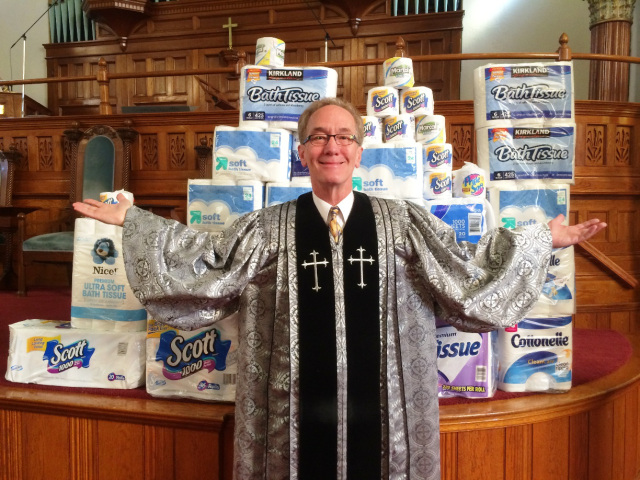
The brisk wind and falling leaves are a treat to some and a terror to others. Yesterday a young, homeless woman was found dead in Swan Lake in Patchogue, NY. Three months earlier a homeless man was found dead in his tent in the same area. We at the Congregational Church of Patchogue have had a clothing pantry, food pantry and soup kitchen for 28 years that is supported by people like YOU. We need money, non-perishable food, gloves, socks and new men and women underwear. Thank you. 631-475-1235.Blessing of the Toilet Paper

I Would Rather Be Blind Than Refuse To See

About two years ago, in 2013, a legally blind person, Albert Rizzi, and his guide dog, Dox, were ejected from a US Airways flight because Rizzi could not get Dox to crawl back under the seat in front of him. They had been on the tarmac for 45 minutes and the dog had become restless. In protest to Albert and Dox’s eviction, the 45 other passengers joined Rizzi and Dox in departing the plane and the flight was cancelled.

This Sunday, October 25th at 10:00 in the morning, Albert Rizzi will return to the Congregational Church of Patchogue, 95 East Main St. to co-present the sermon with Rev. Dwight Lee Wolter. The sermon title is “Believing Is Seeing” and will address the similarities and differences between those who are unable to see and those who are unwilling.

Mr Rizzi unexpectedly lost his sight in 2006. In 2009, he launched the non-profit My Blind Spot, which advocates that all individuals are entitled to acceptance as well as freedom from discrimination, regardless of their challenges in life, and to develop and disseminate assistive technologies to visually impaired persons. My Blind Spot has been working with Intuit to develop an accessible version of the software giant’s popular QuickBooks accounting software in hopes that this will help reduce the national 75% unemployment rate among the blind. Mr. Rizzi’s previous co-presentation at the church was in 2011. His dog, Dox, has retired at home. Thus, Mr Rizzi will be accompanied this time by his new guide dog, Vaughn, who will not be forced to squeeze himself under the pulpit chair.

All are welcome. Refreshments follow.

~ Rev.  Dwight Lee Wolter

At One with the World

I’m starving. I haven’t eaten since last night. The hunger in me is so deep, and the thirst is so wide ~ I will eat anything I can get my hands on to make the hunger and thirst go away. But there is more than one kind of hunger and thirst. Sometimes there is a hunger for something that food can’t fill and drink can’t quench. And yet many of us continue to try to fill our spiritual hunger with material food. We eat, drink, shop, gamble and other things ~ hoping that our spiritual hunger will be sated, and our spiritual thirst will disappear by indulging (or over-indulging) in the allure of the material world. But the only treatment for spiritual hunger… is spiritual food.

How do you feed a spiritual hunger? The Old Testament tells us that when Moses led the Israelites into the desert, God provided the hungry people with manna, a kind of bread that fell from heaven. The New Testament tells us that Jesus fed thousands of people with a few loaves of bread and a couple of fish. The message is clear. God will provide our daily bread.

This is not to deny that physical hunger can have devastating consequences. Seventeen people die every minute from hunger; thirteen of them are children. Thousands of children on Long Island will go to bed hungry tonight. There was plenty of hunger in Jesus’ time as well. But even in the midst of physical hunger, Jesus calls us to also hunger for the spiritual bread of life that does not perish. It is indeed possible to be spiritually full, even when physically empty.

What are you spiritually hungry for? Do you hunger for emotional and financial security? (Who doesn’t?). Do you hunger for reconciliation with family; for companionship; an end to loneliness? Do you hunger to be remembered by your church and family for the good you have done? Do you thirst for peace and justice in the world? Jesus says, “I am the bread of life.” Through the sacrament of communion, the risen bread becomes the risen Christ who nourishes us and gives us what we need to continue on our spiritual path for another day. Through communion, we partake of a common loaf of bread for those who have Christ in common.

May we remain in communion with others and with Christ, praying that all of us will receive the basic elements of what we need to satiate our spiritual hunger and thirst. May God provide us with our daily manna, our daily bread. May Jesus multiply the loaves and fishes. May we offer hands and hearts to help distribute that which God provides, so that there will be enough for us all. With Christ as the cornerstone of our faith and the constant companion of our lives, our stomachs may growl with hunger for the food of the world, but our spirit will forever be filled and fulfilled with the bread of Christ… that endures forever.

The Pope Visits Patchogue, Long Island

I wanted to write about what the Pope said during his visit to the United States. But I soon discovered that what the Pope did was just as significant as what the Pope said. We all know, for example, the Pope refused to move into the lavish papal apartments at the Vatican and has remained in a single room at the hotel with a bed, bathroom and a desk. We probably know that he was greeted at the airport by the President, Vice President, their families and other dignitaries and that he left the airport in the back seat of a Fiat. We know that after his address to the joint Houses of Congress, rather than having lunch with dignitaries, celebrities, diplomats and elected officials ~ he went to Catholic Charities and had lunch with poor families at their soup kitchen. We know that he refused to grant a private audience to anyone, but stopped numerous times to offer an embrace to children and to people in wheelchairs. None of the aforementioned is about what he said; it is all was about what he did.

We also know that the Pope has a 91% approval rating that is higher than any elected or appointed national official in the Americas or in Europe. How did he achieve this rock star status and the love of billions of Catholic and non-Catholic people? Surely, he must have avoided talking about the contentious issues of the day and mastered the art of sounding smart without actually saying anything of substance with which people could take issue. Surely he did not mix politics and religion. Or did he?

Well, the Pope called on the country to open its doors for refugees. He alluded to his opposition to abortion, reminding politicians of “our responsibility to protect and defend human life at every stage of its development.” He called for the end of the death penalty, asked for action regarding climate change and hinted that a redistribution of wealth to “all those people around us who are trapped in a cycle of poverty” might be necessary. For many conservatives, the Pope is too liberal for their taste. One Republican congressman from Arizona boycotted Francis’ speech because of the Pope’s views on climate change. Some liberals loved much of what Francis had to say but skipped over his thoughts on abortion. The Pope spoke of the moral imperative of addressing climate change, income inequality, immigration reform, Syrian refugees, church doctrine, the relationship between science and religion, and he  presided over the first canonization on American soil ~ that of a Latino man who established missions to native Americans.

It sure does not sound like the religious leader of a billion Catholics avoided politics for fear of losing members. Quite the opposite seems to be true. As the first Pope ever to address the joint houses of Congress, he used some familiar church language when he said, “Each son or daughter of a given country has a mission, a personal and social responsibility… You are called to defend and preserve the dignity of your fellow citizens in the tireless and demanding pursuit of the common good, for this is the chief aim of all politics.  A political society endures when it seeks, as a vocation, to satisfy common needs by stimulating the growth of all its members, especially those in situations of greater vulnerability or risk. Legislative activity is always based on care for the people.  To this you have been invited, called and convened by those who elected you.”

The Pope spoke of the need for Congress to keep a focus on The Golden Rule and also reflected on Moses, the patriarch and lawgiver of the people of Israel symbolizes the need of peoples to keep alive their sense of unity by means of just legislation. And the Pope spoke of how Moses lead us directly to God and thus to the transcendent dignity of the human being. He said, “Moses provides us with a good synthesis of your work: you are asked to protect, by means of the law, the image and likeness fashioned by God on every human face.”

The Pope then mentioned four Americans: Abraham Lincoln, Martin Luther King, Dorothy Day and Thomas Merton. The Pope mentioned that this year marks the 150th anniversary of the assassination of Abraham Lincoln, the guardian of liberty, who labored tirelessly that “this nation, under God, [might] have a new birth of freedom”. He continued, “Our world is increasingly a place of violent conflict, hatred and brutal atrocities, committed even in the name of God and of religion.  He spoke of ideological extremism, and the need to be especially attentive to every type of fundamentalism, whether religious or of any other kind; and of how a “delicate balance is required to combat violence perpetrated in the name of a religion.” He spoke of Martin Luther King and the campaign to fulfill his “dream” of full civil and political rights for African Americans and how America continues to be, for many, a land of “dreams” which lead to action, to participation, to commitment.  He spoke of dreams which awaken what is deepest and truest in the life of a people. He said, “I say this to you as the son of immigrants, knowing that so many of you are also descended from immigrants.”

He spoke of Dorothy Day, founder of the Catholic Worker Movement, and of how her social activism and passion for justice were inspired by the Gospel, her faith, and the example of the saints. The fourth American he mentioned was the monk, Thomas Merton who remains a source of spiritual inspiration and a promoter of peace between all  peoples and all religions.

Toward the end of his address, the Pope said, “A nation can be considered great when it defends liberty as Lincoln did, when it fosters a culture which enables people to “dream” of full rights for all their brothers and sisters, as Martin Luther King sought to do; when it strives for justice and the cause of the oppressed, as Dorothy Day did by her tireless work, the fruit of a faith which becomes dialogue and sows peace in the contemplative style of Thomas Merton.”

The Pope spoke of the Golden Rule, Israel, immigration, unity, refugees, God, monks, prison, faith, the gospel, soup kitchens, charity, saints, religion, fundamentalism, mission, and being called to a purposeful existence. And for speaking and acting on these things and more he has achieved rock star status and will presided at an outdoor mass that attracted one million people.

Understanding the Pope is actually very, very simple. He is a Christian.  Everything that comes out of his mouth; every word; every action is based on what the Pope believes Jesus wants for this world. The Pope has now come and gone. There will soon be nothing physical that remains except for a slight, low-emission vapor trail of a Fiat. But we, and our church, and his message shall remain. May Christ guide us to be the heart and hands of God’s will on earth.

Bless,

Pastor Dwight